
Home/Newsletter/Staple greens vs occasional treats: building your piggies' daily plate
Guinea Pig Facts newsletterStaple greens vs occasional treats: building your piggies' daily plate
Hi there,
One question lands in my comments more than almost any other: "Can I feed kale (or broccoli, or parsley, or Brussels sprouts) every day?" It's a great question, because these are all healthy foods. The catch is that "healthy" and "everyday" aren't always the same thing for a guinea pig.
So this week, let's sort the greens into what belongs on the daily plate and what works best as a treat, and then talk about the pellets that round everything out.
Not all greens belong on the daily plate
First, the foundation. Vets agree that a guinea pig's diet should be built on unlimited fresh hay (timothy or another low-calcium grass hay). Veggies come next, around 1–2 cups per piggie per day, and pellets are a small top-up. Veggies add variety and Vitamin C, but they're a side dish, not the main course.
Within that cup, two things decide how often a green can appear:
- Calcium and oxalates. Guinea pigs absorb a lot of the calcium they eat and get rid of the excess through their urine. Too much over time can contribute to bladder sludge and stones.
- Gas. Brassicas such as broccoli, cabbage and Brussels sprouts can make piggies gassy, and a guinea pig's gut doesn't cope well with bloating.
Everyday staples
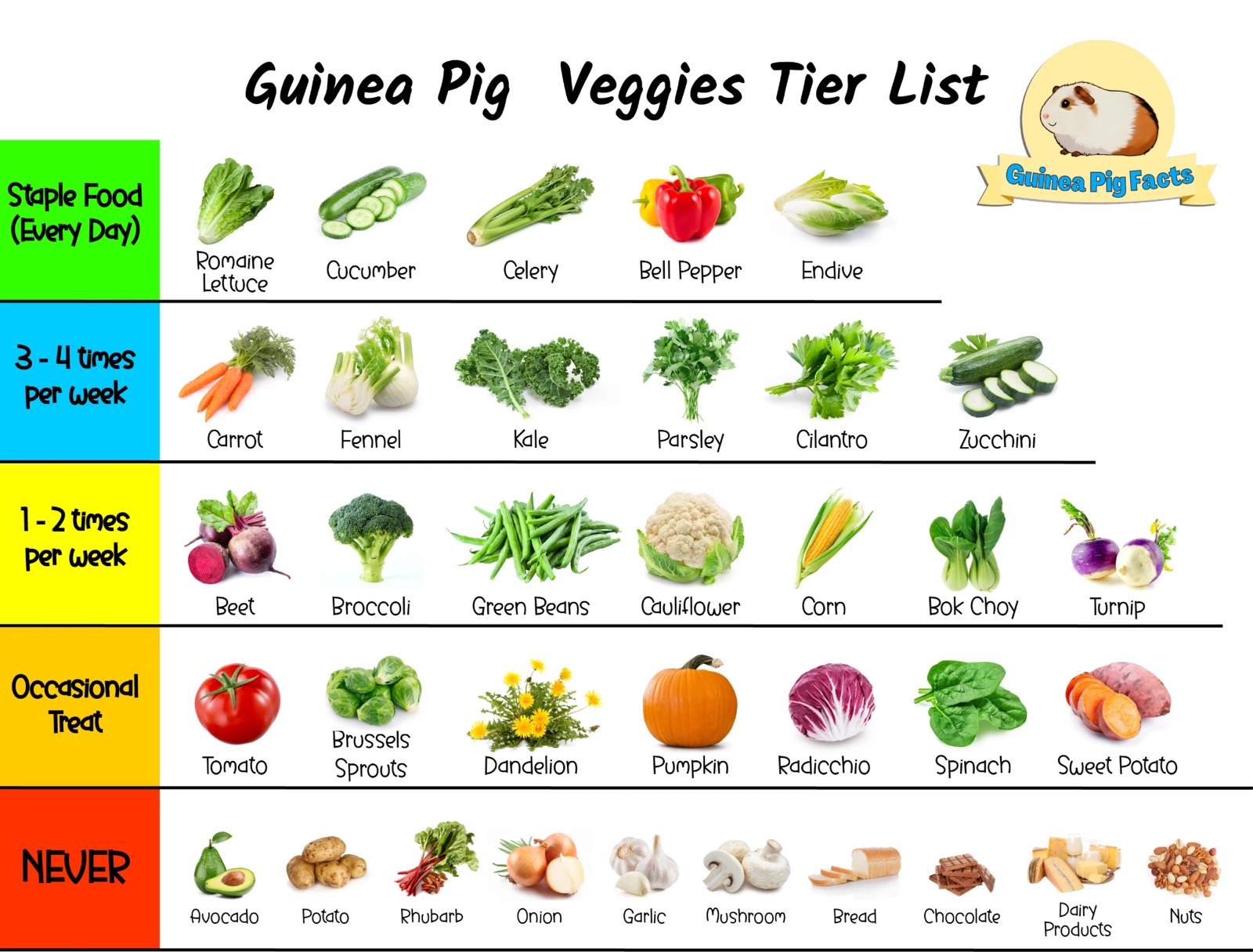
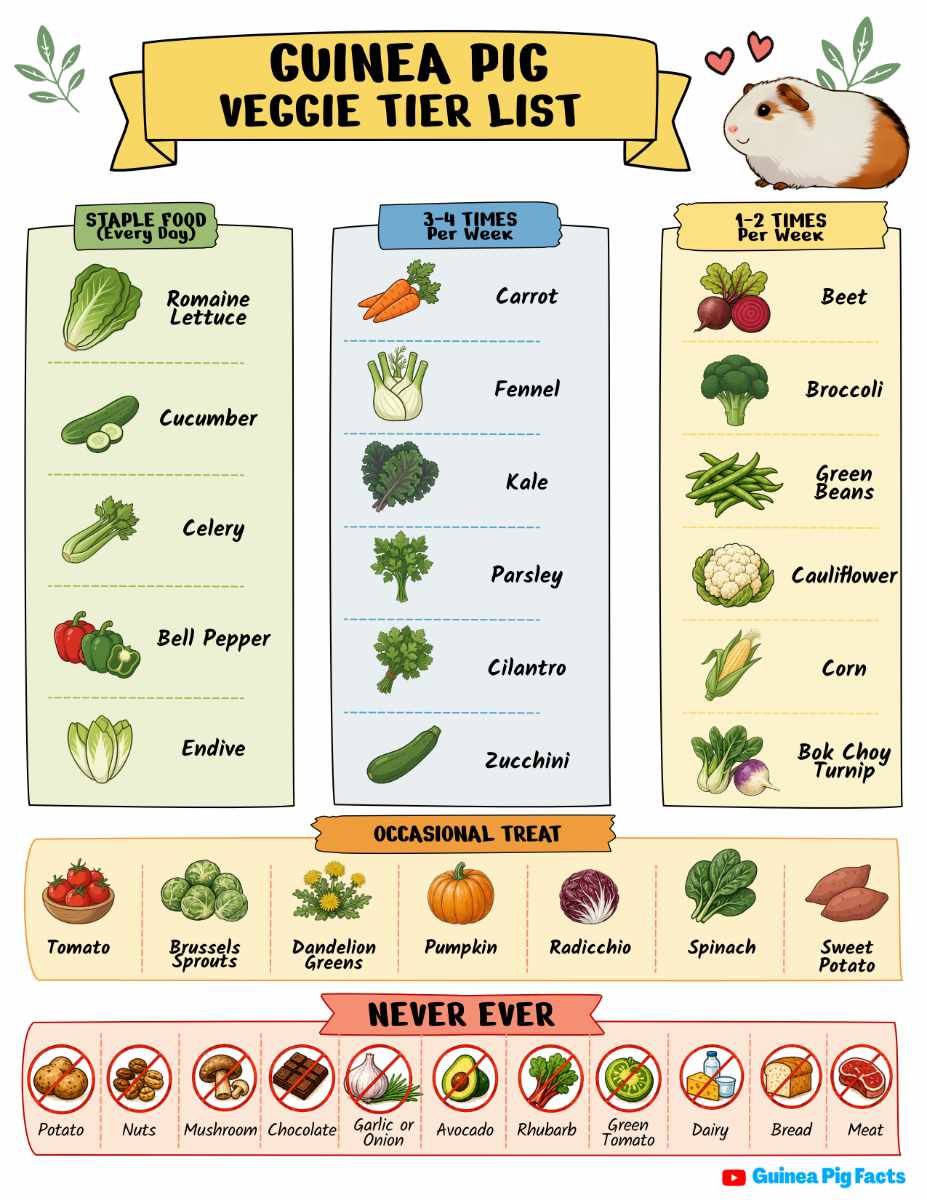
Romaine lettuce, cucumber, celery, bell pepper and endive are gentle, low in calcium and easy on the tummy. These make a great daily base, with bell pepper bringing the Vitamin C.
A few times a week
Kale and parsley are packed with Vitamin C, but they're also high in calcium and oxalates. Offer a small amount 3–4 times a week, alongside carrot, fennel, cilantro and zucchini, rather than every day.
Once or twice a week
Broccoli is nutritious, but it's a gassy one. A floret or two once or twice a week is plenty.
Occasional treats
Brussels sprouts combine the gas of a brassica with a good dose of calcium, so keep them as an occasional treat, along with spinach and tomato.
Pairing it with the right pellet
Pellets fill nutritional gaps, so the type matters more than the brand. Look for:
- Timothy-based pellets for adults. Alfalfa-based ones are higher in calcium and better suited to young or pregnant piggies.
- Plain, uniform pellets, not muesli-style mixes. Piggies pick out the seeds and colorful bits, which can lead to weight gain and dental problems.
- Stabilized Vitamin C on the label, and a fresh bag. Vitamin C fades over time, so buy a size you'll finish within a couple of months.
About 2 tablespoons (1/8 cup) per piggie per day is a typical guide. Your vet can tailor it to your piggie's weight and health.
Here's my tier list so you can see it all at a glance:
Free download
Safe Veggie Tier List
See at a glance which veggies are everyday favorites, occasional treats, or never foods.
Get it freeThe Guinea Pig Veggie Survival Guide
If sorting out which veggies go where feels like a lot to remember, The Guinea Pig Veggie Survival Guide does it for you. It covers which vegetables are safe and how often to serve them, which foods to avoid completely, and simple meal plans that keep calcium in check and Vitamin C covered. It also includes quick daily and weekly health checks, so you can feed with confidence instead of second-guessing every bowl.
Grab your copy on AmazonYou're doing great just by asking these questions. Knowledge is the best gift you can give your piggies.
Give your piggies a gentle scratch from me,
Daniel
Guinea Pig Facts