Home/Newsletter/Bell peppers: your piggies' Vitamin C superpower
Guinea Pig Facts newsletterBell peppers: your piggies' Vitamin C superpower
Hi there,
First, a big, heartfelt thank you for your patience. It's been a little quiet in your inbox, and I appreciate every one of you for sticking around. You're the reason I keep doing this.
Here's what I've been up to. I've been deep in work on my latest book, I've been sharing a lot more on Instagram (we just passed 6,500 followers, which still amazes me), and I built a brand-new website, guineapigfacts.com, where you can grab my guides and charts for free. To celebrate being back, let's talk about the vegetable that does more for your piggies' health than almost any other: the humble bell pepper.
Why guinea pigs need Vitamin C every single day
Most animals make their own Vitamin C. Guinea pigs can't. Like us, they lack the enzyme (L-gulonolactone oxidase) needed to produce it, and their bodies don't store much of it. That means every piggie depends on their daily diet to stay healthy.
How much do they need? Veterinary references put it at roughly 10 mg per kilogram of body weight per day for a healthy adult. Young, pregnant, nursing or sick piggies need more, around 30 mg/kg or higher. For a typical 1 kg adult, that's about 10 mg a day.
What happens without enough
A shortage leads to scurvy. Signs can be subtle at first:
- Rough coat and less energy than usual
- Reluctance to move, swollen or sore joints
- Poor appetite and weight loss
- Slow-healing wounds or bleeding gums
If you notice any of these, please see an exotics vet. Scurvy is very treatable when it's caught early.
Why bell peppers are the star
Bell peppers are one of the richest, safest Vitamin C sources you can offer, and most piggies adore them. According to USDA data, per 100 g of raw pepper:
- Yellow: about 180 mg
- Red: about 128 mg
- Green: about 80 mg
So even a small strip covers a big share of the daily need. The trade-off: red and yellow peppers are sweeter, so serve them as part of a varied veggie plate rather than piling them on. Green peppers are lower in sugar and a great everyday option.
Getting the most out of every slice
Vitamin C breaks down with air, heat and time. Cut peppers just before serving, offer them raw, and remove the seeds and stem. Pellets help too, but their Vitamin C fades once the bag is open, so check the date and use fresh bags. Adding Vitamin C to water isn't recommended: it degrades quickly and can put piggies off drinking.
Free download
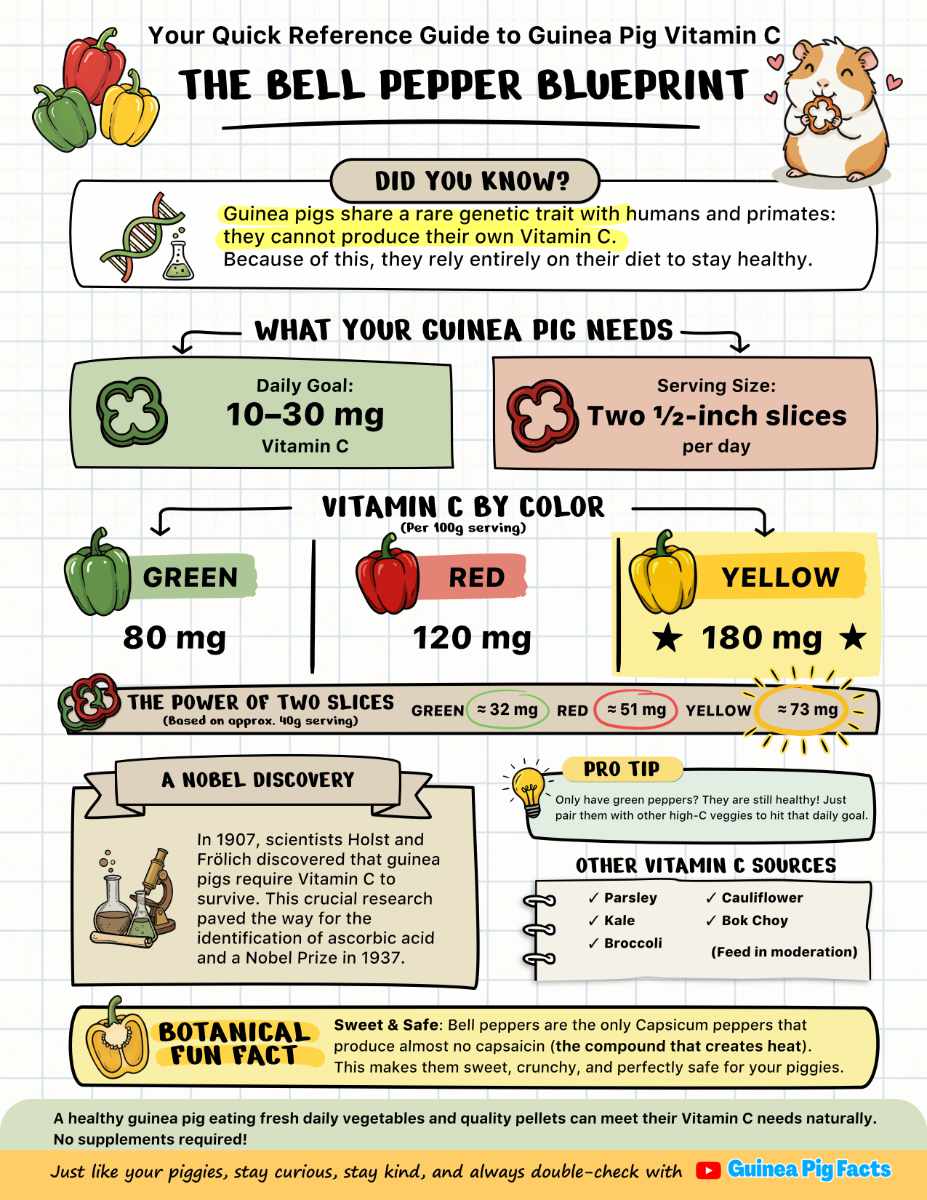
The Bell Pepper Blueprint
Your quick reference to Vitamin C: daily goals, serving sizes, and how pepper colors compare.
Get it freeThe Guinea Pig Veggie Survival Guide
If you've ever stood in the produce aisle wondering "Can my piggies eat this?", this book is for you. The Guinea Pig Veggie Survival Guide takes the guesswork out of feeding: which vegetables are safe and how often, which foods to avoid completely, and simple meal plans that keep Vitamin C covered every day. It also walks you through quick daily and weekly health checks, so you can spot problems early and feel confident you're giving your piggies the best care.
Grab your copy on AmazonThank you again for being here. Knowledge is the best gift you can give your piggies, and I'm so glad to share it with you.
Give your piggies a gentle scratch from me,
Daniel
Guinea Pig Facts